
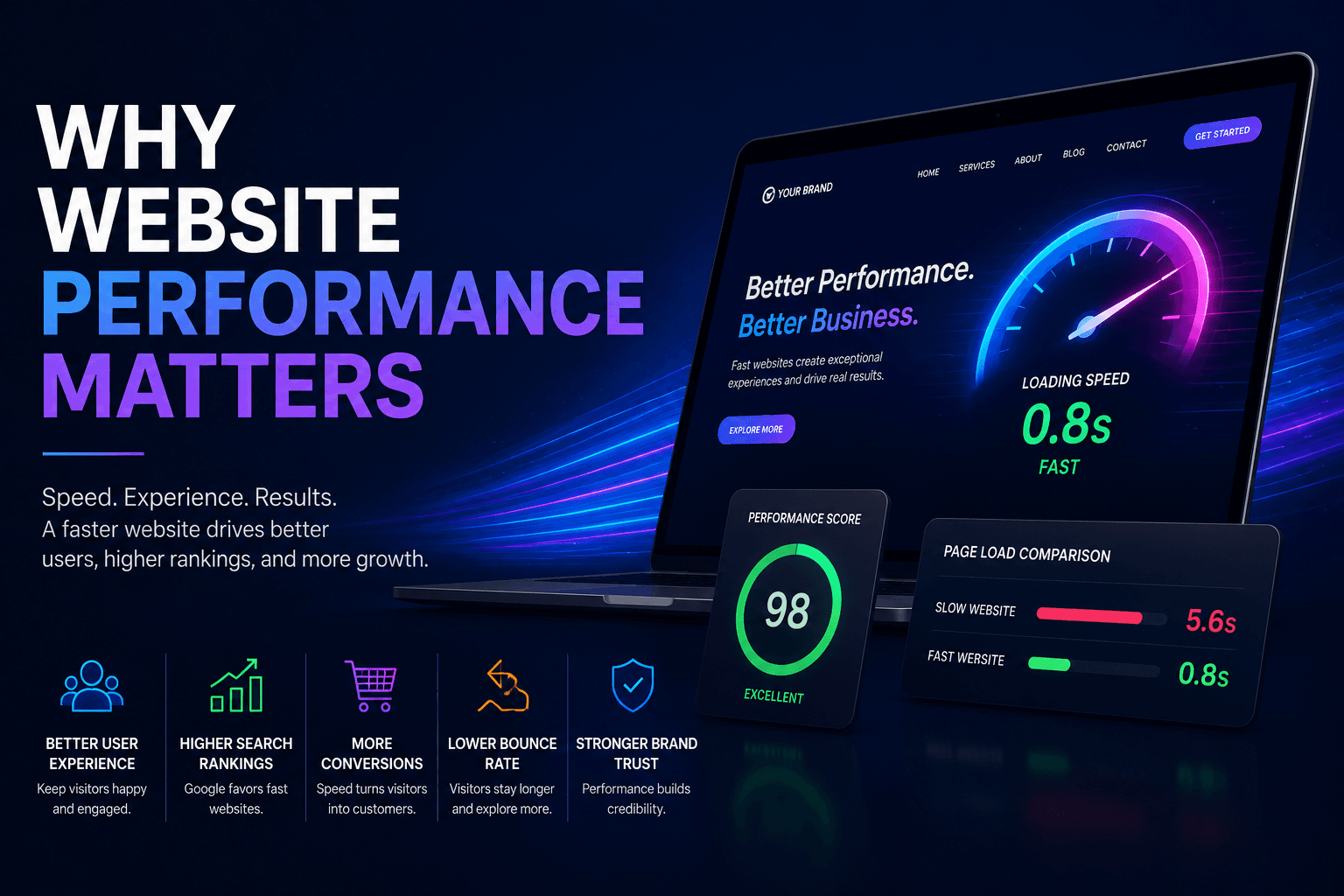
Performance is usually discussed as a technical metric: Core Web Vitals, Lighthouse scores, time to first byte. It's actually a business metric wearing a technical costume. A slow site loses visitors before they ever read the value proposition it was built to communicate.
Where the seconds actually go
The most common performance killers aren't exotic: unoptimized images served at full resolution to a phone screen, JavaScript bundles shipping code for features the current page doesn't even use, and fonts blocking text from rendering until they finish downloading. None of these require a rebuild to fix; they require someone treating performance as a real requirement, not an afterthought squeezed in before launch.
Performance and trust are the same signal
There's a second, less obvious cost: a slow, janky site quietly tells a visitor that the company behind it isn't especially careful, even if that visitor couldn't articulate why they felt that way. For a business selling software or technical services, that's a particularly expensive signal to send by accident.
The fix isn't a single trick. It's treating load time as a real product requirement from the start (image formats, font loading strategy, code splitting), the same way accessibility or security get treated as non-negotiable, not nice-to-haves bolted on later.