
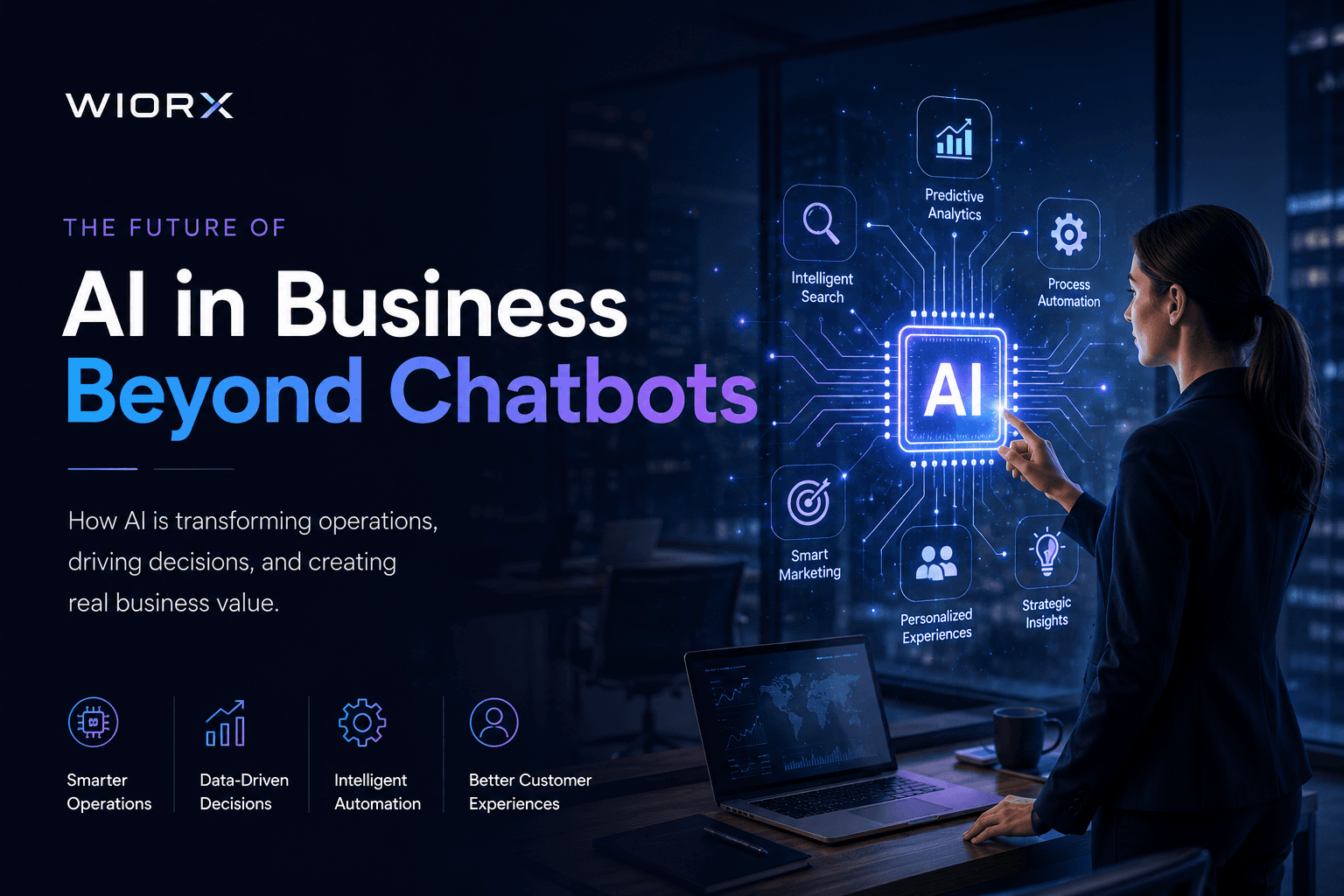
Ask most business owners what AI means for their company, and they'll describe a chat widget in the corner of a website. That's a fair starting point (it's the most visible form AI has taken so far), but it's also the shallow end of what's actually possible. A chatbot answers questions. The more valuable work is AI that does things: reconciling invoices, routing support tickets to the right team before a human ever sees them, flagging anomalies in operational data before they become expensive problems.
The real shift: from answering to acting
The meaningful change isn't that AI got smarter at conversation: it's that AI systems can now be given a scoped, well-defined task and a set of tools, and carry that task out with human oversight rather than human execution. That's the difference between a chatbot and an agent: a chatbot responds, an agent completes work.
This matters most in the operational layer of a business: the repetitive, rules-based work that consumes hours but doesn't require judgment. Categorizing incoming leads. Drafting first-pass responses to common support requests. Reconciling data between two systems that don't talk to each other natively. None of this needs a general-purpose AI that can discuss philosophy. It needs a narrow, reliable system built for one job.
Why oversight matters more than autonomy
The businesses getting real value from AI right now aren't the ones chasing full autonomy; they're the ones building systems with clear human checkpoints. An AI agent that drafts a customer response and flags it for approval is more valuable, and more trustworthy, than one that sends replies unsupervised. The engineering discipline is in knowing where the human belongs in the loop, not in removing them entirely.
That's the actual frontier: not smarter chatbots, but well-scoped systems that take real operational weight off a team's shoulders, with the right safeguards built in from day one.