
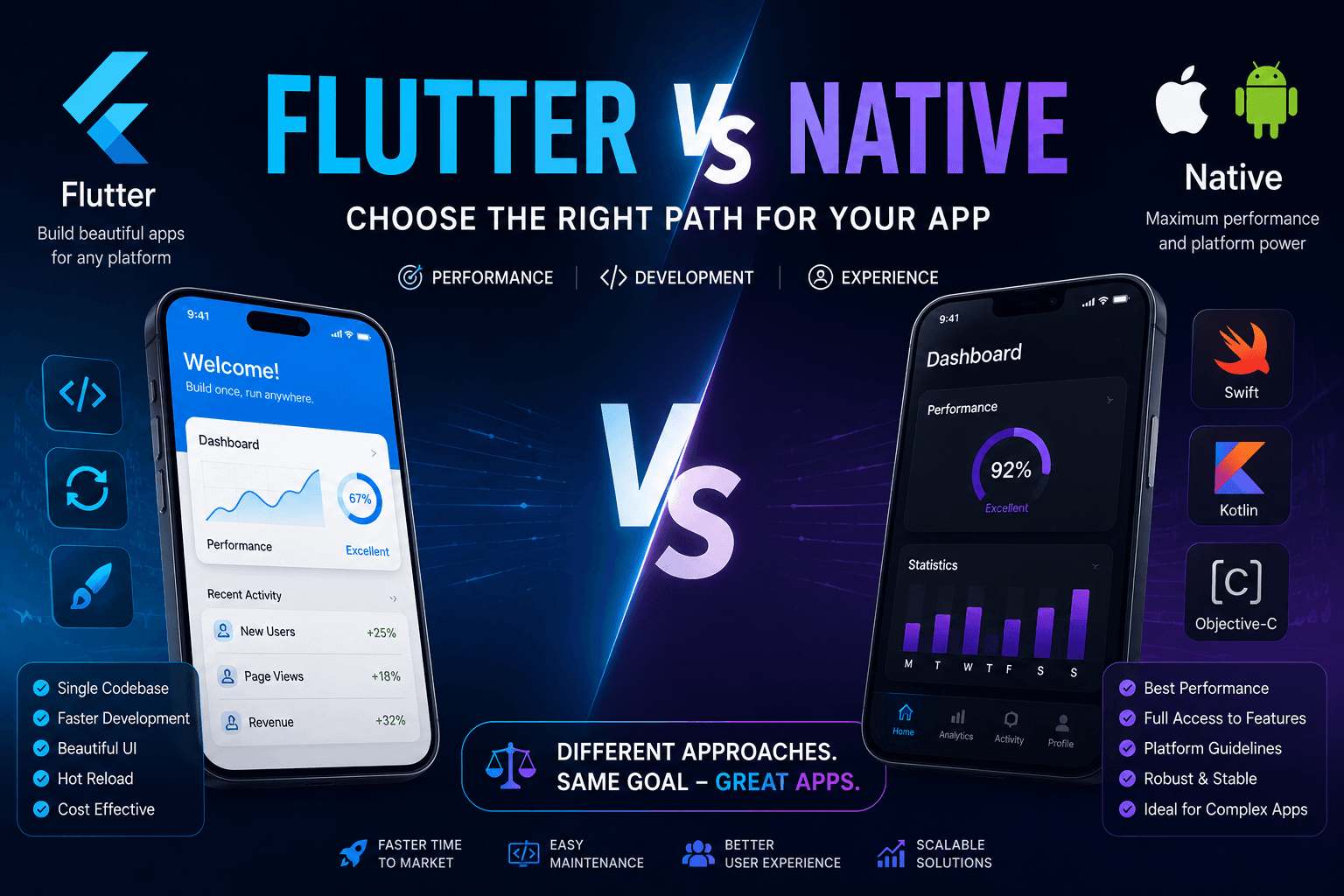
Flutter builds one codebase that runs on both iOS and Android. Native means writing separate Swift and Kotlin codebases, each tailored to its platform. Both are legitimate, professionally-used approaches: the debate isn't which one is objectively better, it's which one fits a specific project.
Where Flutter genuinely wins
For most consumer and business apps (the kind with standard UI patterns, moderate platform-specific requirements, and a team that needs to ship on both platforms without doubling engineering headcount), Flutter's single codebase is a real, substantial advantage. Feature parity between iOS and Android stays automatic instead of requiring two parallel implementations to stay in sync.
Where native still matters
Apps that lean heavily on cutting-edge platform-specific features the day they ship, or that need the absolute ceiling of performance (real-time gaming, complex AR), are still better served by native development. Cross-platform frameworks add a translation layer that occasionally costs you access to the newest platform capabilities immediately at release.
The honest framing: Flutter is the right default for the large majority of business apps, and native is the right call for a specific, identifiable minority. A good technical partner tells you which one your project actually is, rather than defaulting to whichever they're more comfortable building.